
Understanding Health Reimbursement Arrangements (HRAs): Types, Compliance Considerations, and Strategic Use

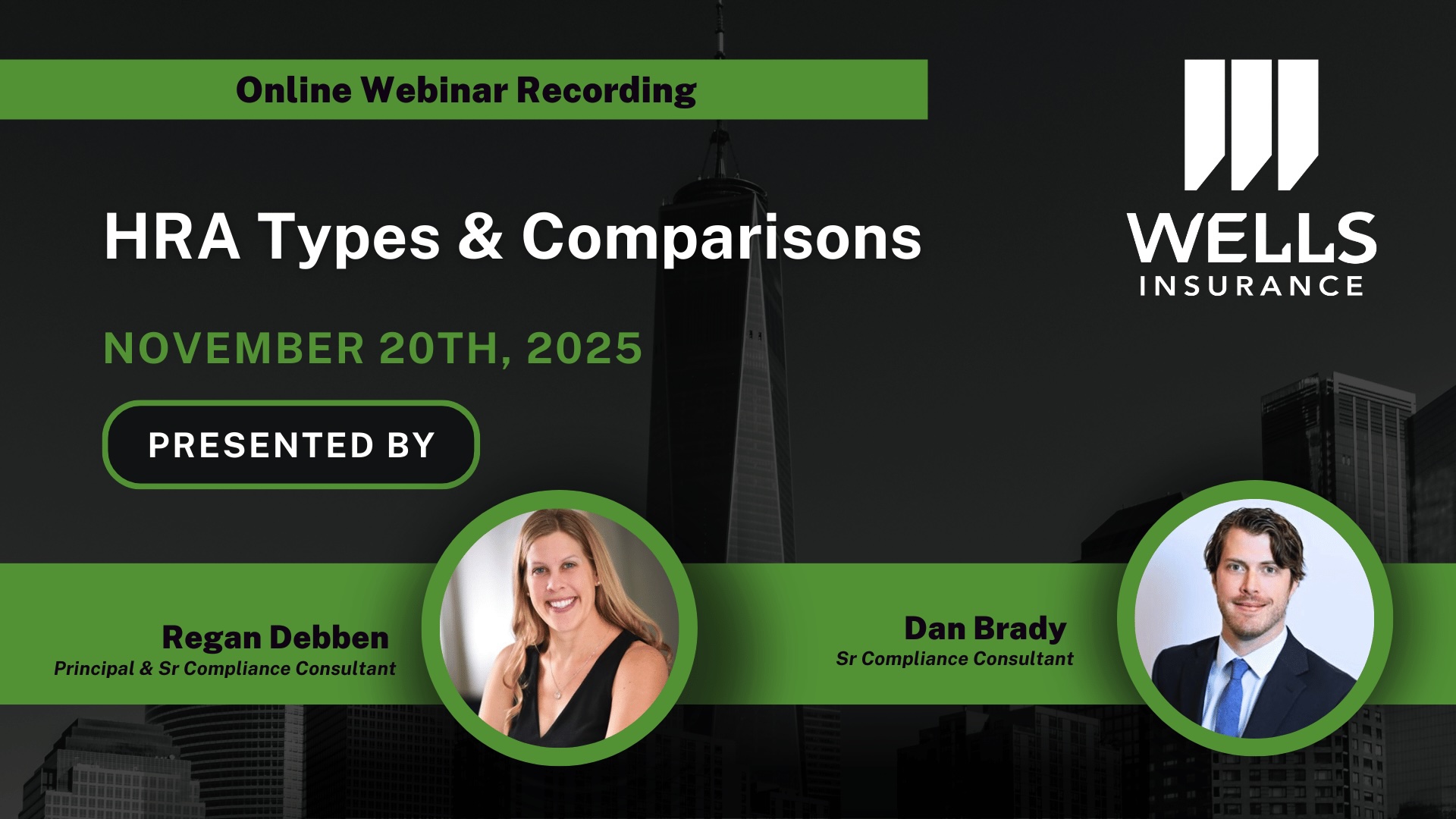
Understanding Health Reimbursement Arrangements (HRAs): Types, Compliance Considerations, and Strategic Use
Subscribe to newsletter
Subscribe to receive the latest blog posts to your inbox every week.
Thank you for your submission!
Understanding Health Reimbursement Arrangements (HRAs): Types, Compliance Considerations, and Strategic Use
Introduction
As employers continue to evaluate their benefits strategies, many are looking for ways to balance rising healthcare costs with meaningful employee support. Health Reimbursement Arrangements (HRAs) are gaining renewed attention as a flexible tool that can complement or, in some cases, replace traditional group health plan components.
At the same time, HRAs can be complex. Different types come with different rules, limitations, and compliance requirements. Without a clear understanding, it can be difficult to determine whether an HRA fits into your overall benefits strategy or how to structure one appropriately.
This article outlines the core types of HRAs, how they work, and where they may fit. It also highlights key compliance considerations and common design decisions employers should understand before implementing an HRA.
Key Takeaways
- HRAs are employer-funded arrangements that reimburse employees for qualifying medical expenses on a tax-advantaged basis
- There are multiple types of HRAs, each with different rules around eligibility, funding limits, and integration with medical plans
- Standard HRAs must be integrated with a group health plan, while others (like ICHRAs) can replace traditional coverage
- Most HRAs are subject to ERISA, COBRA, and nondiscrimination requirements
- Design choices, such as eligible expenses and employee classes, directly impact compliance and employee outcomes
- HRAs can help employers manage costs more predictably while offering targeted support to employees
What Is an HRA and How Does It Work?
A Health Reimbursement Arrangement (HRA) is an employer-funded benefit used to reimburse employees for eligible medical expenses.
Core Characteristics
- Employer-funded only
Employees cannot contribute to an HRA - Tax-advantaged reimbursements
Reimbursements are generally tax-free when used for qualifying medical expenses under IRS rules - No cash-out option
Unused funds cannot be taken as cash, though some plans allow carryover - Flexible design
Employers can define:- Contribution amounts
- Eligible expenses
- Which employees are eligible
Common Use Cases
- Offsetting deductibles or out-of-pocket costs
- Providing targeted reimbursement for specific services
- Offering alternatives to traditional plan design features
What Rules Apply to All HRAs?
While plan designs vary, most HRAs share several compliance and structural requirements.
Key Similarities
- Must reimburse qualified medical expenses (as defined by IRS Section 213(d))
- Subject to ERISA, requiring:
- Plan documents
- Summary Plan Descriptions (SPDs)
- Typically subject to COBRA continuation
- Cannot discriminate in favor of highly compensated employees (under Section 105(h))
Where They Differ
HRAs vary significantly in:
- Employer eligibility (size and structure)
- Employee eligibility
- Funding limits
- Ability to reimburse premiums
- Impact on HSA eligibility
- COBRA and reporting requirements
These differences are what drive the need to select the right type of HRA for your specific goals.
Standard HRAs: Integrated with Group Health Plans
When Are Standard HRAs Used?
Standard HRAs are typically used alongside a traditional group health plan to help employees cover out-of-pocket costs.
Key Features
- Available to employers of any size
- Must be integrated with a group medical plan
- No minimum or maximum employer contribution
- Generally cannot reimburse individual health insurance premiums
Common Design Approaches
Covering Deductibles and Cost Sharing
Employers often use HRAs to offset:
- Deductibles
- Copays
- Coinsurance
This can make higher deductible plans more manageable for employees.
Post-Deductible HRAs (HSA Compatibility)
To preserve Health Savings Account (HSA) eligibility:
- HRA funds are only available after the minimum deductible is met
- Allows employees to still contribute to an HSA
Spousal Incentive HRAs
Employers may offer HRAs to employees who:
- Waive the employer’s plan
- Enroll in a spouse’s plan instead
This can help manage plan participation and overall cost exposure.
Limited Purpose HRAs (Dental and Vision Only)
What Makes Them Different?
These HRAs are restricted to dental and vision expenses only.
Why Employers Use Them
- Can be paired with High Deductible Health Plans (HDHPs)
- Do not impact HSA eligibility
Compliance Notes
- Subject to ERISA and COBRA
- Not subject to certain healthcare reform requirements
- Still subject to nondiscrimination rules
Excepted Benefit HRAs (EBHRAs)
How They Work
EBHRAs are standalone HRAs that:
- Do not require enrollment in the employer’s medical plan
- Must be offered alongside access to other group coverage
Key Limitations
- Annual employer contribution cap (e.g., $2,200 for 2026)
- Cannot reimburse:
- Individual health premiums
- Medicare premiums
- Standard group plan premiums
Where They Fit
- Supplemental benefit for employees who waive coverage
- Reimbursement for specific services not covered by the main plan
Individual Coverage HRAs (ICHRAs)
What Is an ICHRA?
An ICHRA allows employers to reimburse employees for:
- Individual health insurance premiums
- Other qualifying medical expenses
Instead of offering a traditional group plan.
Key Requirements
- Employees must be enrolled in:
- Individual coverage, or
- Medicare
- Employers cannot offer a choice between:
- ICHRA and group health plan (within the same employee class)
Employee Class Rules
ICHRAs must be offered to defined employee classes, such as:
- Full-time vs. part-time
- Geographic location
- Salaried vs. hourly
Custom or informal groupings are not permitted.
Strategic Use Cases
- Employers with distributed or remote workforces
- Organizations struggling with participation requirements
- Employers seeking predictable healthcare costs
ACA Considerations
For applicable large employers (ALEs), ICHRAs can:
- Satisfy employer mandate requirements
- Be structured to meet affordability thresholds
Qualified Small Employer HRAs (QSEHRAs)
Who Can Use Them?
- Employers with fewer than 50 full-time employees
- Employers not offering a group health plan
Key Features
- Must be offered to all eligible employees
- Employer contributions are capped annually
- Can reimburse:
- Individual premiums
- Other medical expenses
Limitations
- Less flexibility compared to ICHRAs
- Not widely used due to eligibility restrictions
Retiree HRAs
Purpose
Retiree HRAs allow employers to provide post-employment health support in a controlled way.
Key Advantages
- Helps cap long-term employer liability
- Flexible reimbursement design, including:
- Medicare premiums
- Individual coverage
- Out-of-pocket expenses
Compliance Considerations
- Subject to ERISA, COBRA, and reporting requirements
- Must be offered only to retirees (not active employees)
Key Compliance Considerations
ERISA Requirements
Employers must:
- Maintain plan documentation
- Distribute SPDs
- Follow claims and appeals procedures
COBRA Continuation
Most HRAs require:
- Offering continuation coverage after qualifying events
- Establishing a separate COBRA premium calculation
Nondiscrimination Rules
Employers cannot:
- Favor highly compensated employees
- Provide disproportionate benefits to certain groups
Administration Considerations
While self-administration is possible in limited cases, most employers rely on third-party administrators due to:
- HIPAA privacy requirements
- Claims substantiation rules
- Ongoing compliance obligations
When Should Employers Consider an HRA?
HRAs may be worth evaluating when:
- Medical plan costs are increasing
- Employers want more predictable budgeting
- There is a need for targeted or supplemental benefits
- Workforce demographics vary significantly
The right structure depends on:
- Employer size
- Current benefits strategy
- Workforce needs
- Administrative capacity
Final Thoughts
HRAs offer flexibility, but that flexibility comes with complexity. Understanding how each type functions, and how it fits within broader compliance requirements, is critical before implementation.
For many employers, HRAs are not a standalone solution but part of a broader benefits strategy designed to balance cost, access, and employee experience.
Disclaimer
This content is provided for general informational purposes only and is not intended as insurance advice. Coverage, terms, and availability can vary by carrier and state. For guidance specific to your situation, we recommend speaking with a licensed insurance professional.
Contributors