
Stay Safe on the Water: Why a Kill Switch Can Be Life-Saving

Stay Safe on the Water: Why a Kill Switch Can Be Life-Saving
Subscribe to newsletter
Subscribe to receive the latest blog posts to your inbox every week.
Thank you for your submission!
A recent boating accident off Wrightsville Beach underscores a stark reality: even experienced boaters are vulnerable to unexpected health incidents on the water. This tragic event highlights why using a kill switch—also known as an engine cut-off switch—is essential for every vessel under 26 ft.
What Happened?
On May 22, 2025, a 62-year-old man fell overboard from his boat near Palm Tree Island. Authorities believe he suffered a heart attack or lost consciousness before going into the water and tragically struck his head. Without a kill switch attached, the engine continued to run—propelling the vessel uncontrolled and leaving him stranded.
Emergency responders arrived swiftly, but the man was found deceased. According to officials, a kill-switch lanyard would have instantly shut off the engine upon his fall, potentially preventing the ensuing chaos and fatal outcome.
How Kill Switches Work
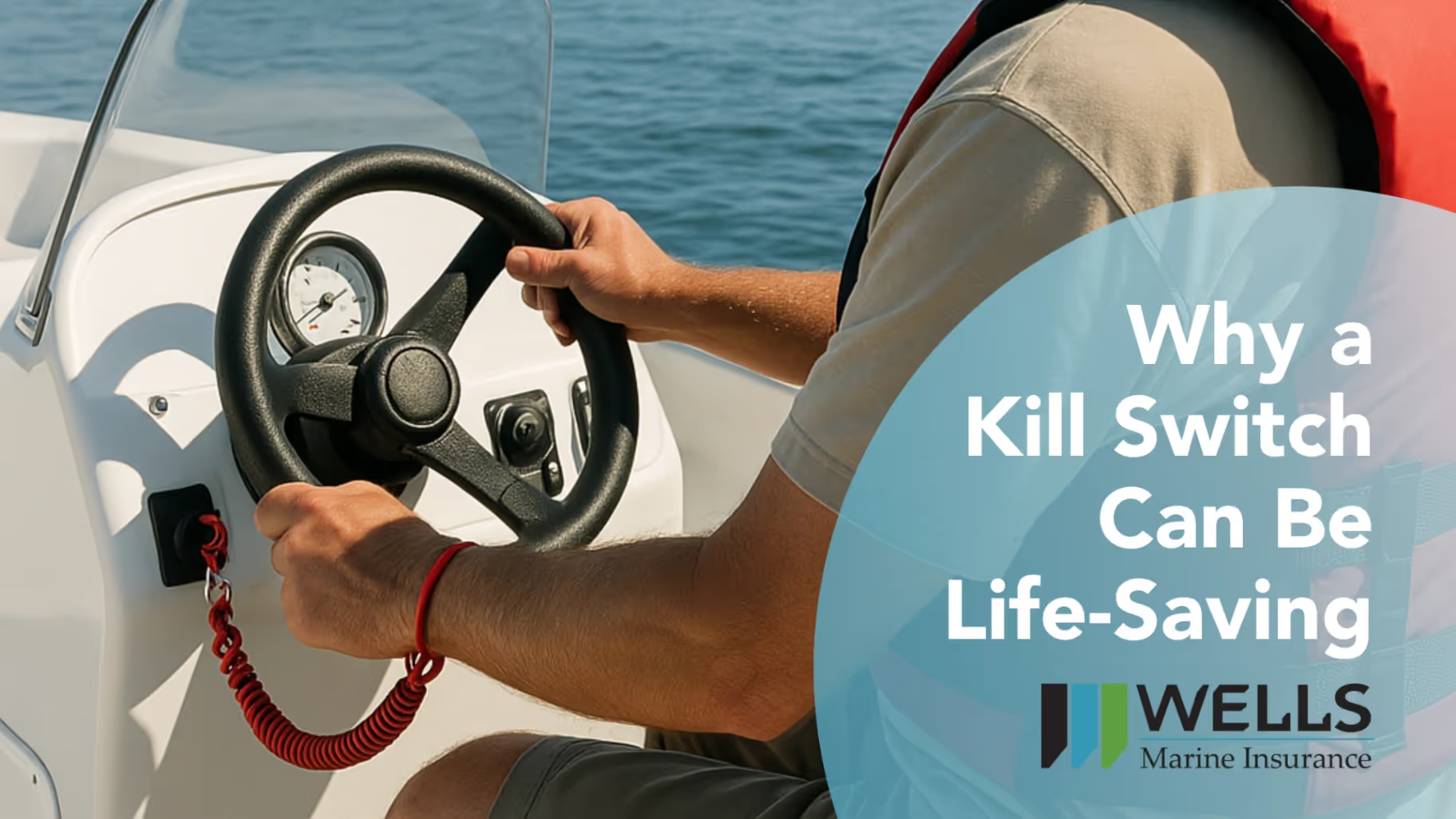
A kill switch connects the boat’s ignition to a lanyard worn by the operator—or, with modern wireless systems, a device worn by any onboard passenger. If the person falls overboard, the connection is broken, and the engine immediately stops. This prevents the boat from becoming an unpredictable hazard and makes it possible to quickly re-board and restart safely .
A Pattern of Risk
This isn’t an isolated case. In April 2025, three people were injured near Masonboro Inlet after a 20-year-old operating a small skiff lost control following wake impact. The operator was cited for not having a kill switch, highlighting that this is more than a regulation—it’s a vital safety tool.
Boating safety officials emphasize that "boats under 26 ft are legally required to use a kill switch—tethered or wireless—whenever on plane".
👥 Expert Warnings
- Quantra Taylor, with NC Wildlife Resources, called the Wrightsville Beach incident “really heartbreaking” and urged boaters to take that extra second to attach a kill switch—“that second can make a difference”.
- Sea Tow personnel advise pairing the kill switch with a life jacket. In many accidents, the operator ends up in the water unexpectedly—sometimes due to health events—and these paired safety devices can mean the difference between survival and tragedy.
Final Word
Every boater—veteran or novice—can be one health event or wake collision away from disaster. Using a kill switch and life jacket is not just legal—it’s responsible. The tragedy near Wrightsville Beach is a sober reminder that one precaution can prevent untold calamity.
Whether you're launching at Wrightsville, Masonboro, or any local inlet, make attaching your kill switch as automatic as buckling a seatbelt. And if your boat hasn’t been fitted with a wireless or tethered cut-off yet, consider stopping by somewhere like your local marine supplier and upgrading this season. It’s a small investment with lifesaving potential.
For personalized boating insurance advice, equipment coverage, or risk-mitigation planning, contact Wells Marine Insurance today. We’ll help you prepare so you can enjoy the water responsibly and safely.
Contributors